FocusFlow
An end-to-end research and design project uncovering why university students lose focus during lectures and how a unified learning workspace can work with attention, not against it.
Title
Industry
Date
Approach
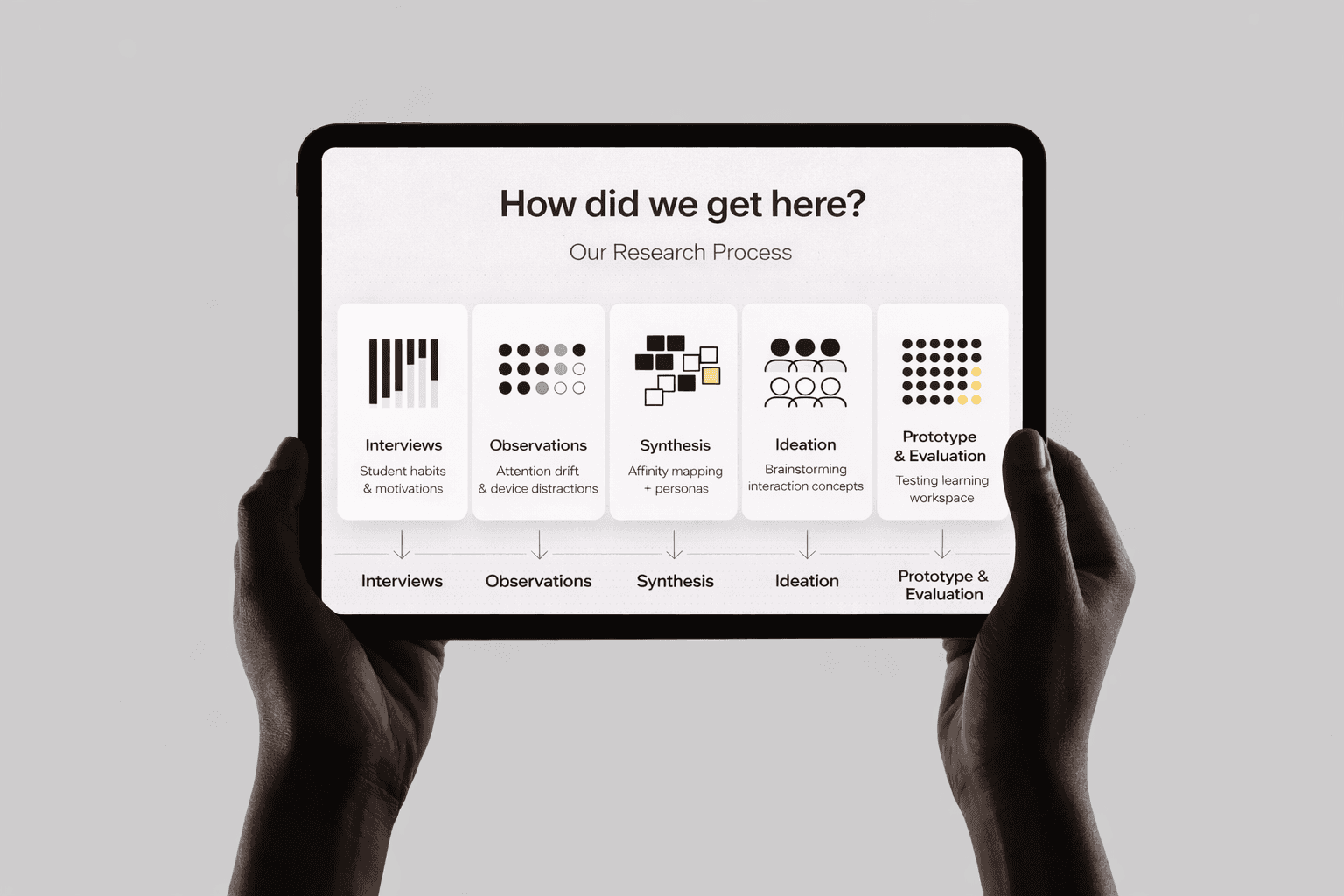
Starting from zero assumptions, conducted mixed-methods research across interviews with undergraduate and graduate students and naturalistic observations in classrooms and library study spaces. Synthesized findings through affinity diagramming into eight behavioral themes, then built three distinct personas including an ADHD-diagnosed undergrad, an international grad student, and an instructor each with detailed journey maps.
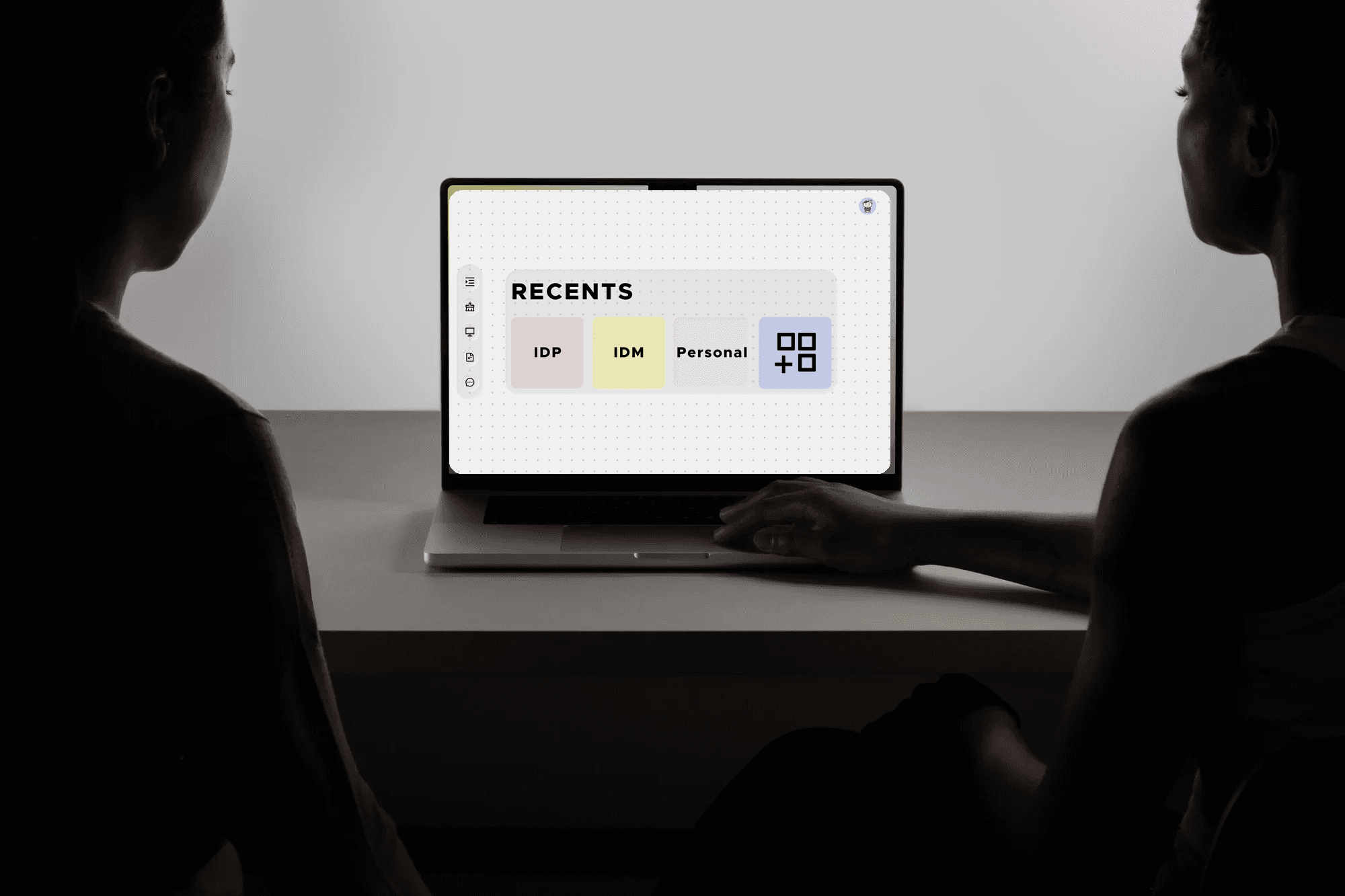
Brainstormed 70+ ideas across two team members, narrowed to nine through structured critique, and finalized three core concepts with faculty feedback. Designed a mid-fidelity Figma prototype featuring a modular widget workspace Notes, Chat, Live Cast, and Micro-Quizzes then validated it through think-aloud sessions and heuristic evaluations.
Challenge
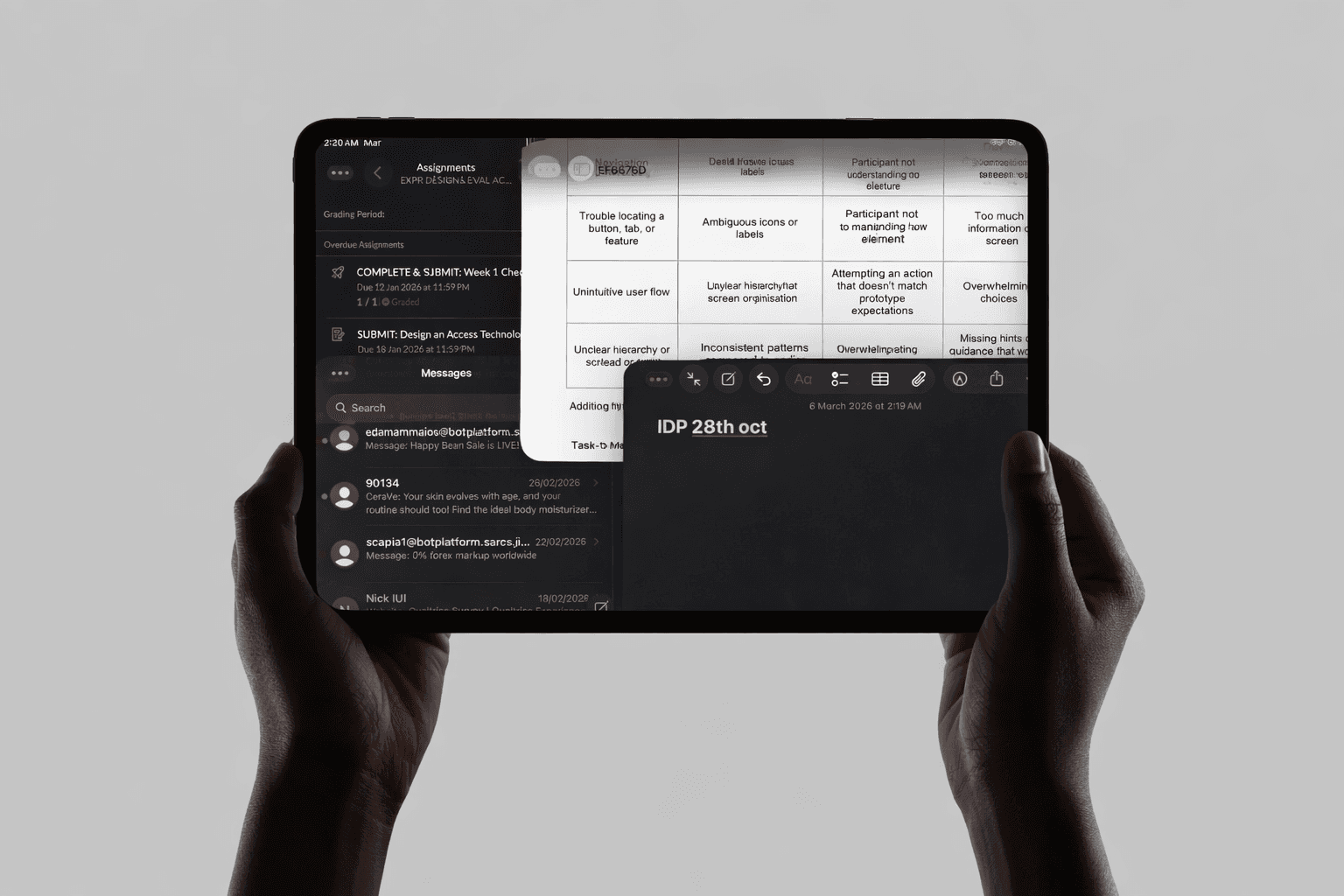
Students aren't disengaged because they don't care. They're overloaded constantly context-switching between Zoom, Canvas, Google Docs, and chat apps just to follow a single lecture. Every tab switch breaks concentration, and after 20–30 minutes, most students are already drifting. Meanwhile, instructors are managing slides, polls, and attendance simultaneously, with no reliable signal of when the room has lost them. The tools exist. The integration doesn't.
Projects
Explore more like this one

Selected projects that reflect my approach to design, development, and execution.